Knock First
The kettle at number nine had a whistle that rose a little more each morning, as if it was trying to get someone's attention, and Maud had stopped trying to fix it around the third day. She stood in the narrow kitchen in her socks with one hand on the cold tap and listened. Above her, through the old lath and plaster, something was moving a chair across a floor. It was not a hard scrape. It was a patient drag, a pause, then another drag, the sound of someone who did not mind taking all morning about it.
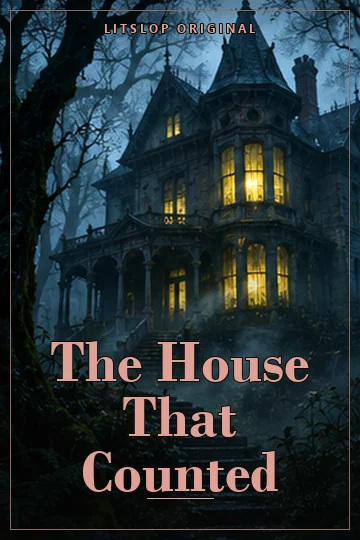
The house sat at the end of Lantern Row, the last in a terrace of eleven brick houses that all leaned very slightly toward the canal, as if they had been listening to it for a hundred years. The agent had rented it to her in a single afternoon. He had been apologetic about the price and more apologetic about the back bedroom, which was locked. 'The family keeps it,' he had said, in the tone people use for a dog that bites. 'Every house on the Row has one. It's a local thing.'
Her landlord was a man called Edwin Pyke who lived two streets over and came round on the first Thursday of every month to check the boiler and read the meter with the seriousness of a surgeon. He had never once gone upstairs without stopping at the bottom of the stairs first. On the day she moved in he had stood on the landing with one hand on the newel post and said, 'Knock before you go in there, will you? Just a formality.' She asked him what was in there. 'Nothing,' he said, and then, because she kept looking at him, 'Nothing that's been used in a long time.'
Maud had laughed. She was thirty-four, she had left a marriage that had been haunted by a man who listened at doors, and she was not going to be frightened by a locked room and a sensible landlord. For the first week she had been right. The house creaked the way old houses do. The radiators knocked. The canal made a sound like a slow breath through the sluice gates at night, and a moth kept getting into the bathroom and drowning in the sink. Nothing had moved that she could not account for.
Now it was the second Tuesday, and at ten past eight in the morning the chair scraped across the boards again. She put down her cup and went up the stairs with one hand on the wall, counting the treads out of habit. The seventh always gave a little. The landing was cold and smelled of wax and of something sweeter underneath, like lilies left too long in a vase. The door to the back room was shut. It was painted the same cream as the others, but someone had rubbed the handle with a cloth so often that the brass shone.
She didn't knock. She put her palm flat against the wood and felt a faint vibration under it, the kind a fridge makes through a wall. Then the chair stopped. The silence came down so suddenly that she could hear her pulse in her ear. From the far side of the door a woman's voice said, 'Oh, you're up.' It was pleasant and unhurried, the voice of someone who had been expecting her and was glad about it.
Maud took her hand away. She said, 'Hello?' and immediately wished she hadn't, because it sounded like an invitation. The voice did not answer. Instead the drag began again, and this time it came toward the door, and she heard the soft creak of the floorboard beside the frame, the one that sank under her weight and that she had stepped over every morning since she moved in. Something was standing right behind the wood. She could feel exactly where it stood, the way you feel someone at your back on a bus.
She went down the stairs without running. She made herself keep the same pace she had come up at. In the kitchen she picked up her phone and didn't call anyone, because who would she call? Her sister would say leave, and her sister would be right, but Maud had left once already and had spent eight months afterwards in a flat above a launderette with the windows painted shut. She did not want to become a woman who ran from houses. So she rang Pyke.
He answered on the fifth ring and sounded as if he had been dozing in a chair. 'Is it the boiler?' he said. 'There's someone in the back room,' she said. There was a long pause, and behind it she heard a television, the thin laugh of a studio audience. 'Did you knock?' 'No.' 'Good,' Pyke said, and she thought he sounded relieved. 'Don't. Come down to the shop after nine and I'll explain. It isn't dangerous, Miss Hale. It's just untidy.' Then he hung up on her.
She stood at the sink and watched the moth come up out of the plughole with its wings stuck down with water, and she thought about the other houses on the Row. She had walked past them every day since she moved in and had noticed, without making anything of it, that every upstairs window was open an inch at the top, even in January. Air for the room. That was what the woman at the newsagent had said when Maud bought milk and asked about the neighbours. 'Keep your windows open a crack, love, so they can breathe.' Maud had assumed she meant the house.
At half past nine she pushed open the door of the shop on Canal Street, under its bell, past a window of sweet jars faded to the colour of old teeth. Pyke was behind the counter in a cardigan buttoned wrong. He was doing the crossword in pen and didn't look up. On the counter beside the newspaper lay a small brass key on a loop of red string, and next to it a cup of tea gone cold and skinned over.
'Sit,' he said. She didn't. He sighed and put the pen down. 'My grandmother rented that house before me. Every house on Lantern Row has a room the family keeps. They don't go in, and nobody else goes in either, and in return the room keeps its end of things. It doesn't come out. It doesn't wander about. It just stays where it is and tidies itself.' He touched the key with one finger. 'That room is empty, Miss Hale. I've been in every week for thirty years and there's nothing in it. Knock anyway.'
'Who was in it before me?' Maud said. Pyke took a long time to answer. The woman had been called Lorna Cray, he said, and she had lived at number nine until March, when her things went out in a van. What he didn't say, but what Maud pieced together from the gaps in his sentences, was that Lorna had liked everything in its place and had found, one winter, that the room upstairs did not agree with her about where things belonged. Her husband had locked it. Her husband had left in the spring. In June Pyke had found Lorna's wedding ring on the mat outside the back door, very clean, with a single dark hair wound round it.
'She's not gone,' Maud said. Pyke turned the key over in his fingers. 'Nobody's ever been sure. But somebody in that room is still choosing the furniture, and when a room gets a new tenant it likes to get acquainted.' He held the key out. 'Take it if you want. Don't go in. Knock every single time, and if it doesn't answer, leave the landing light on and go to bed. It doesn't like the dark on the stairs.'
Maud took the key. It was warm from his hand, which she found worse than if it had been cold. Outside, the canal lay flat and green, and a woman was walking a spaniel along the towpath and glancing up at the Row as she passed. Maud walked home the long way, past the eleven houses, and at number nine she looked up at the back bedroom window. It had been shut when she left at eight. It was open an inch at the top, and the lace curtain behind it had been folded very neatly, the way a careful woman folds a napkin before she sits down to dinner.
End of the free first chapter. Keep reading in the app · more Haunted house